↳ Case Study: BodyMap
A VR Solution for Medical Education
Timeline
2006-2024
Role
Design Lead
Responsibitlity
Product Design●Project Management
Tool
Unreal Engine●Figma●Adobe●Notion
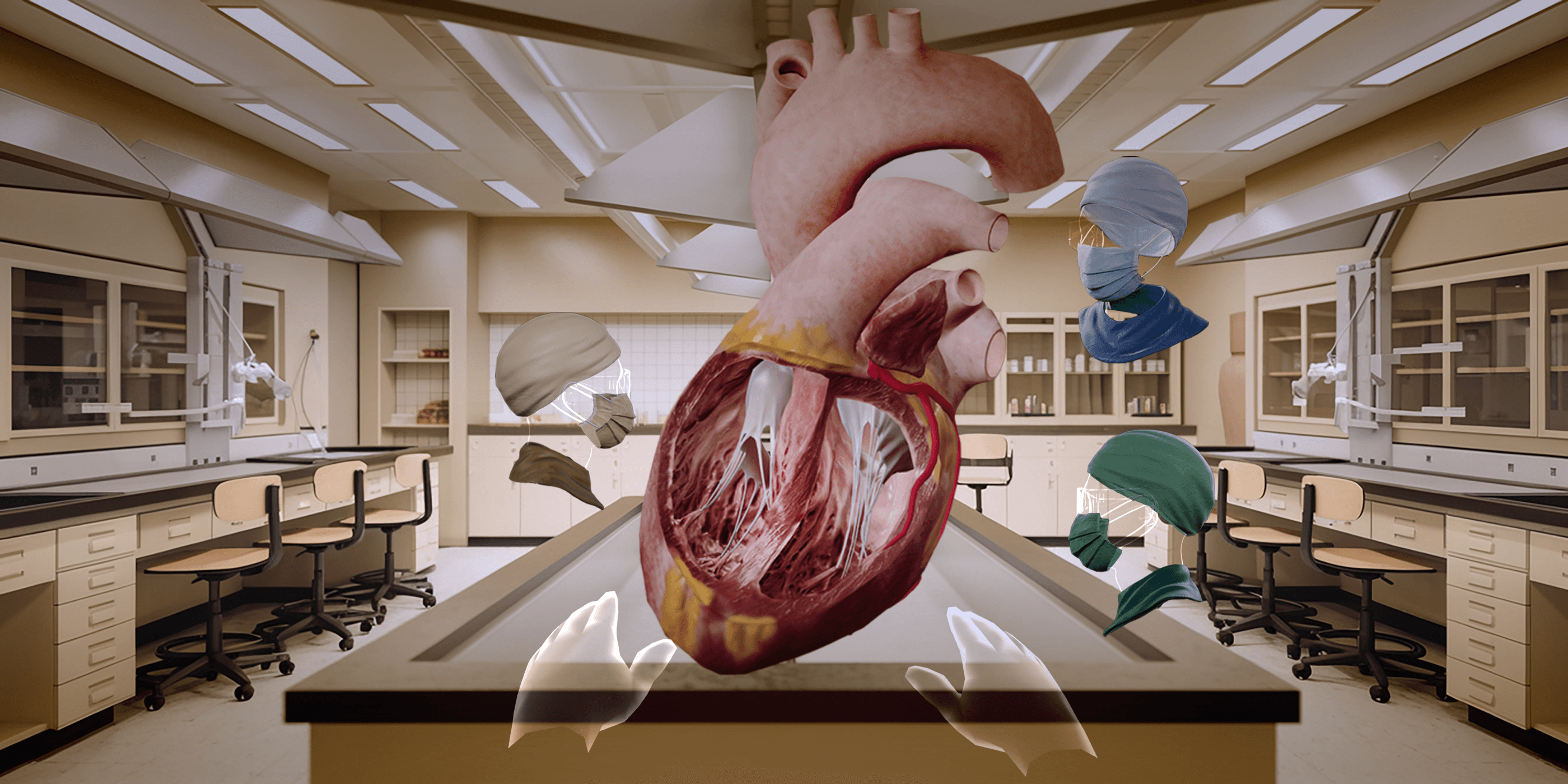
OVERVIEW_
Anatomy education has always struggled with the complexities of body structures and a lack of hands-on practice due to cadaver shortages. These challenges often result in students feeling overwhelmed and underprepared for clinical practice.
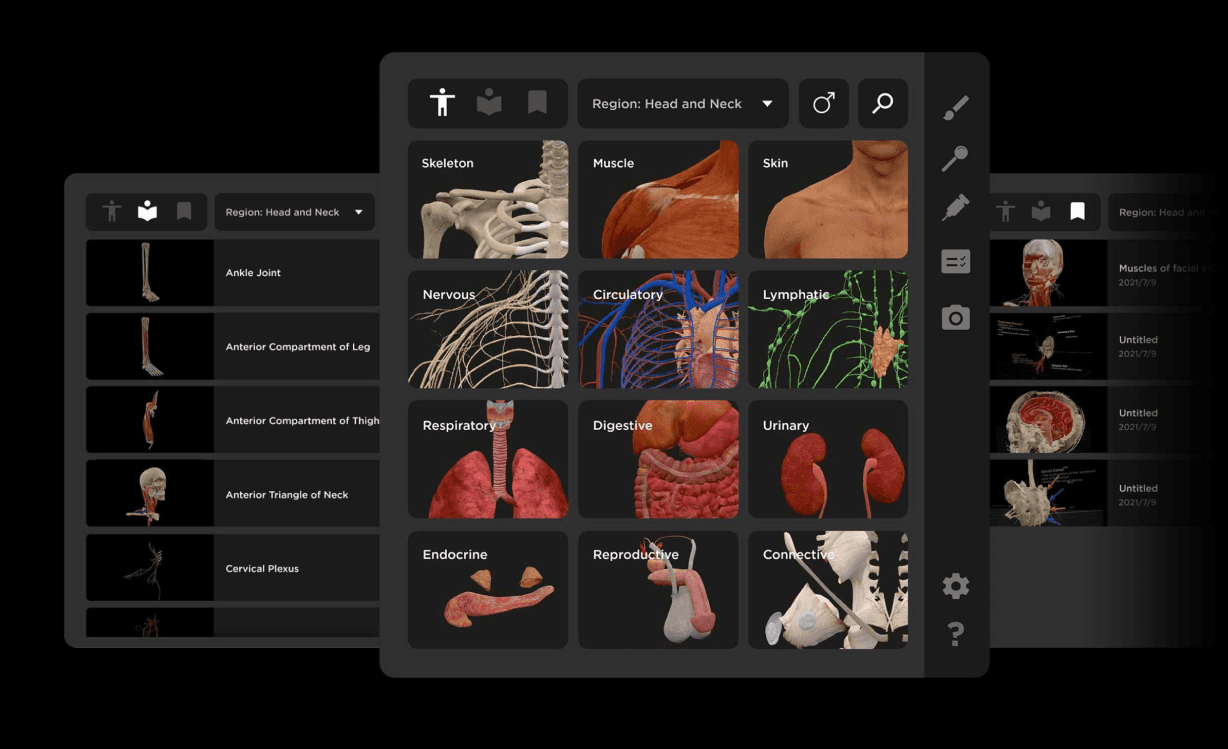
BodyMap tackles these problems with its VR solution, featuring comprehensive 12 human body systems and immersive simulation.
Students can now perform countless virtual dissections, mastering anatomy in a risk-free environment.
Today, BodyMap has been adopted by nearly 30 prestigious medical schools worldwide, including New York University, Columbia University, and National Taiwan University, revolutionizing how the next generation of healthcare professionals learn and understand the human body.
IMPACT_
90%+
of students reported VR enhanced their anatomy learning.
94%
agreed this should be
offered to medical students.
1
Results of UCLA's study: Investigating the potential of virtual reality to improve anatomy teaching: a group discussion analysis with medical students
TESTIMONIAL_
“BodyMap is the future of medical education. Its detail, adaptability, and ease of use make it possible to teach anatomy without a cadaver and without a physical lab. This can democratize medical education and make learning accessible to many.”
Gregory Katz
Assistant Professor of Medicine at NYU. Grossman School of Medicine, USA
“BodyMap is better than anything else on the market for students. It’s an important tool for students as a big part of our curriculum is not only knowing the anatomical features, but seeing how they relate to one another.”
Catherine Howell
Medical Student
University of Toledo Medical School, USA
FEATURES_
FRAMEWORK_
Working Backwards
Since each lecture contains 10–20 steps, even though we are building only one lecture for the MVP, there are still around 50 regions to be developed in the next phase.
Define Scope and Criteria
In collaboration with NTU, we chose the pectoral region as the demo example for the MVP, aligning it with their curriculum. The professor emphasized the need for students to familiarize themselves with the dissection procedure through step-by-step guidance. In the long run, a total of 49 simulation lectures will be developed, categorized by body region.
From Steps to Patterns
Using the pectoral region as an example for the MVP, the process consists of 17 steps. These steps follow a pattern centered on observation — the primary goal of dissection courses. By using observation as breakpoints, these steps are consolidated into 4 learning objectives, each containing 3 to 5 steps. This restructuring helps students better digest information, focus on key goals, and stay motivated by achieving them.