Crafted a VR solution for medical students to master anatomy through engaging experiences.

Crafted a VR solution for medical students to master anatomy through engaging experiences.

Project

BodyMap VR

Year

2016⇀2024

Role

Lead Designer, part time PM

Tool

Unreal Engine●Figma●Adobe●Notion

OVERVIEW_

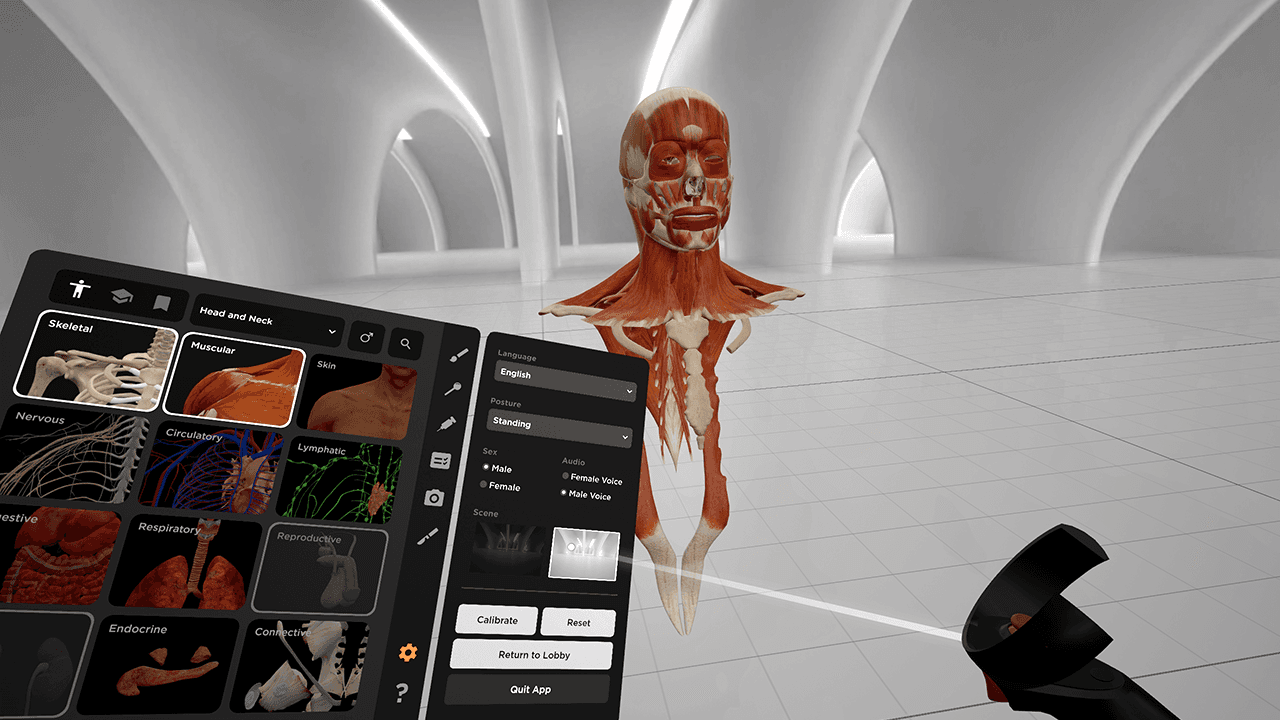
In 2016, often referred to as the Year of VR, this emerging medium was just beginning to enter the consumer market. As the initial and only designer on the team, building BodyMap from scratch meant there were no competitors to analyze and no established design guidelines to reference.

Our approach therefore relied heavily on iteration, through continuous prototyping and testing, we leveraged the immersive nature of VR while ensuring accessibility and reducing cognitive load for medical students. BodyMap now serves nearly 30 prestigious medical schools globally, including NYU, Columbia, and NTU.
Feature: Hyperlink, Pathway

IMPACT_


90%+
of students reported VR enhanced their anatomy learning.

94%
agreed this should be
offered to medical students.

1

Findings from UCLA's research: Exploring the promise of virtual reality in enhancing anatomy education: a focus group study with medical students

TESTIMONIAL_


“BodyMap is the future of medical education. Its detail, adaptability, and ease of use make it possible to teach anatomy without a cadaver and without a physical lab. This can democratize medical education and make learning accessible to many.”


“BodyMap is the future of medical education. Its detail, adaptability, and ease of use make it possible to teach anatomy without a cadaver and without a physical lab. This can democratize medical education and make learning accessible to many.”

Gregory Katz

Assistant Professor of Medicine at NYU. Grossman School of Medicine, USA


“BodyMap is better than anything else on the market for students. It’s an important tool for students as a big part of our curriculum is not only knowing the anatomical features, but seeing how they relate to one another.”


Catherine Howell

Medical Student
University of Toledo Medical School, USA

FEATURES_

Users can click on a flashcard to instantly view the mentioned structures, saving time on information retrieval. The visualization of blood flow and nerve conduction directions helps in understanding physiological mechanisms. These popular features have since set design standards for some competitors in the field.